
Healing Repetitive Strain: Tennis Elbow vs. Golfer’s Elbow Treatment in Edmonton
Quick Summary
Tennis Elbow (Lateral): Affects the outer elbow and forearm extensors; common in office workers and racquet sports.
Golfer’s Elbow (Medial): Affects the inner elbow and forearm flexors; common in tradespeople and golfers.
The Cause: Micro-tearing of tendons due to repetitive gripping, twisting, or lifting.
The Solution: A combination of soft tissue release, blood flow stimulation, and progressive loading.
Edmonton Context: Addressing specific local factors like cold-weather joint stiffness and occupational ergonomics.
Professional Care: How clinical massage therapy accelerates the remodelling of damaged tendon fibres.
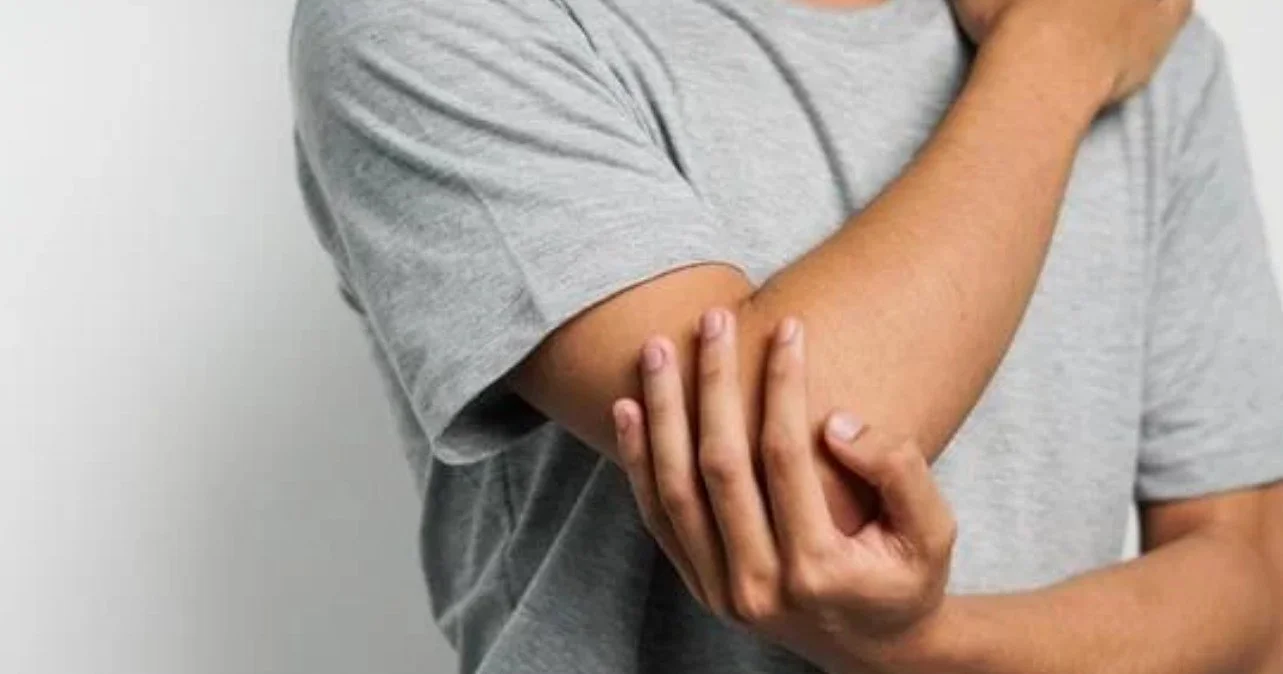
If you are experiencing persistent pain on the inner or outer side of your arm, you are likely dealing with a repetitive strain injury (RSI). Whether the discomfort stems from hours at an Edmonton office workstation or repetitive lifting on a local construction site, the goal is the same: identifying the specific tendon involved and implementing a clinical strategy to restore function. This guide provides a comprehensive comparison of lateral and medial epicondylitis and outlines a professional path to recovery through specialized therapeutic massage and kinesiology.
Understanding Repetitive Strain Injury Elbow Treatment
Repetitive strain injuries (RSIs) of the elbow are among the most frequent complaints in clinical practice. These conditions, medically known as epicondylitis, are not usually the result of a sudden accident. Instead, they develop through thousands of small, repetitive movements that exceed the capacity of the tendon to repair itself.
When the demand placed on the forearm muscles is too high, the tendons that attach these muscles to the bone begin to fray. If this continues, the body moves from a state of acute inflammation to chronic degeneration, often referred to as tendinosis. Identifying whether your pain is lateral or medial is the first step toward effective relief.
Tennis Elbow: Lateral Epicondylitis
Tennis elbow occurs on the lateral (outer) side of the elbow. It primarily affects the extensor carpi radialis brevis muscle. This muscle is responsible for stabilizing the wrist when the elbow is straight. Even if you have never picked up a tennis racquet, you can develop this strain through tasks like typing, painting, or using manual tools.
Golfer’s Elbow: Medial Epicondylitis
Golfer’s elbow is found on the medial (inner) side of the elbow. It involves the tendons of the wrist flexors and the pronator teres. These muscles allow you to flex your wrist and rotate your forearm. Activities involving heavy gripping, such as using a hammer or carrying heavy grocery bags, are common culprits.
Ready to address your pain? If you are tired of managing symptoms with ice and rest, you canrequest a consult to speak with a clinical specialist about your specific injury.
Key Differences: Tennis Elbow vs. Golfer’s Elbow
While both conditions are types of tendonitis (or tendinosis), they require different approaches to rehabilitation. The following table summarizes the distinctions to help you identify your specific strain.
| Feature | Tennis Elbow (Lateral) | Golfer’s Elbow (Medial) |
|---|---|---|
| Pain Location | Outer bony bump of the elbow | Inner bony bump of the elbow |
| Primary Muscle | Extensor Carpi Radialis Brevis | Pronator Teres / Flexor Carpi Radialis |
| Common Triggers | Typing, using a mouse, backhand sports | Squeezing, heavy lifting, hammering |
| Painful Motion | Extending the wrist (lifting hand up) | Flexing the wrist (curling hand in) |
| Grip Weakness | Most felt when the arm is straight | Most felt when squeezing objects |
| Nerve Involvement | Rarely involves tingling | Can involve ulnar nerve (pinky/ring finger) |
Local Edmonton Considerations for RSI Recovery
Living and working in Edmonton, Alberta, presents unique environmental factors that can influence the severity and recovery time of elbow strains.
Cold-Weather Stiffness: During the long winter months, reduced peripheral circulation can lead to increased joint stiffness. Cold temperatures cause muscles to contract, which puts extra tension on already strained tendons.
Occupational Trends: Edmonton’s economy relies heavily on sectors like construction, oil and gas, and tech. We see a high volume of mouse elbow in the downtown core and hammer elbow among tradespeople in the surrounding industrial parks.
Seasonal Activity Shifts: The sudden transition from sedentary winter months to intense gardening or golf in the spring often leads to a spike in medial epicondylitis cases.
The MRMT Kinetic Restoration Framework

To ensure that recovery is both thorough and permanent, we recommend a system called the Kinetic Restoration Framework. This three-pillar approach ensures we aren't just treating the symptom, but fixing the biomechanical cause.
1. Tissue Decompression
Chronic strain leads to hypertonicity in the forearm muscles. When these muscles stay contracted, they act like a tight rope pulling on the bone. We use deep tissue and myofascial techniques to release this tension, effectively lengthening the muscle and taking the pressure off the tendon attachment point.
2. Vascular Stimulation
Tendons are notoriously slow to heal because they have a poor blood supply. Targeted friction and movement are used to bring oxygenated blood to the white zone of the tendon. This localized increase in circulation provides the necessary nutrients for cellular repair and helps flush out metabolic waste.
3. Mechanical Loading
The final pillar involves integrating kinesiology and corrective exercise. Once the pain is managed, the tendon must be taught to handle stress again. This is done through specific loading protocols that encourage the growth of healthy, organized collagen fibres.
Clinical Recovery Timeline: What to Expect
Healing a tendon is a slower process than healing a muscle. Because tendons have less blood flow, you must follow a structured timeline to avoid re-injury.
Step-by-Step Recovery Checklist
Week 1-2: The Protection Phase
Reduce activities that cause sharp pain.
Apply ice for 10 minutes after an unavoidable activity.
Focus on therapeutic massage therapy in Edmonton to calm the surrounding forearm muscles.
Week 3-6: The Mobility Phase
Begin gentle range-of-motion stretches for the wrist.
Introduction of cross-fibre friction to the tendon site.
Address shoulder and neck tension that may be causing compensatory strain.
Week 6-12: The Strengthening Phase
Start eccentric loading (slowly lowering weights) to build tendon resilience.
Gradually return to sport or heavy work tasks using ergonomic supports.
Advanced Biomechanics: The Role of the Kinetic Chain
One of the most overlooked aspects of elbow pain is that the elbow is a hinge joint sandwiched between the wrist and the shoulder. In a clinical setting, we often find that the elbow is the victim of dysfunction elsewhere in the kinetic chain.
Shoulder Stability and Elbow Load
If the rotator cuff or scapular stabilizers are weak, the arm lacks a stable base. This forces the smaller muscles of the forearm to overwork to maintain control during lifting or reaching. For an Edmonton carpenter swinging a hammer, a weak shoulder can translate into chronic golfer's elbow because the forearm flexors are doing the work the shoulder should be handling.
Wrist Alignment and Ergonomics
In the office environment, many "mouse elbow" cases are actually caused by wrist deviation. If the wrist is tilted to the side or extended upward for hours, the extensor tendons are kept in a shortened, stressed state. Correcting the ergonomics of your workstation is a mandatory step in the injury recovery and rehabilitation process.
Managing Tendinosis: When Pain Becomes Chronic
If your elbow pain has lasted longer than three months, you are likely dealing with tendinosis rather than tendonitis. While tendonitis is an inflammatory condition, tendinosis is a degenerative one. In this state, the body has essentially given up on trying to heal the tendon and has laid down a "patch" of weak, disorganized scar tissue.
To fix tendinosis, the clinical approach must be more aggressive. We use specific manual therapy techniques to "re-injure" the tissue in a controlled way, sparking a new inflammatory response that the body can then heal correctly. This is often accompanied by a more rigorous kinesiology program to ensure the new tissue is strong and aligned.
Common Mistakes in Elbow Recovery
Many people struggle with chronic elbow pain for years because they fall into predictable traps. Avoid these common errors to ensure your recovery stays on track:
Stretching Too Aggressively: In the acute stage, aggressive stretching can actually pull the tendon further away from its attachment point at the bone.
Relying Only on Anti-Inflammatories: Medications mask the pain signal, which often leads people to overexert themselves and worsen the micro-tears.
Ignoring the Shoulder: If your shoulder is weak or tight, your elbow has to work twice as hard to stabilize your arm.
Complete Immobilization: While rest is good, "frozen" tendons become brittle. Controlled, pain-free movement is necessary for healthy fibre remodelling.
What To Do If Something Goes Wrong
If you follow a recovery plan but find your symptoms are changing, take the following steps:
Assess for Numbness: If you feel pins and needles in your fingers, the inflammation may be compressing a nerve. Stop exercise and seek a clinical assessment immediately.
Evaluate Night Pain: If the pain is waking you up at night despite rest, you may need a more advanced diagnostic test to rule out a significant tear.
Adjust the Load: If your elbow feels worse 24 hours after a massage or exercise session, the intensity was too high. Scale back by 50% for the next session.
Professional Review: If you have seen no improvement in 4 weeks, your injury may be a secondary symptom of a different issue, such as a cervical spine (neck) impingement.
Clinical Constraints and Logistics
When seeking professional care, it is important to understand the logistics of treatment:
Assessment Requirements: Every new patient must undergo a physical assessment to confirm whether the injury is truly epicondylitis or a referred pain pattern.
Treatment Frequency: For chronic RSI, a single session is rarely enough. Most clinical plans require 4 to 6 sessions spaced one week apart to see significant structural change.
Home Care Commitment: Clinical massage provides the stimulus for healing, but the patient must perform the prescribed home stretches to maintain those gains between appointments.
Take the next step toward recovery. You can book a clinical assessment online to have your elbow pain evaluated by our Edmonton-based team.
FAQ: Frequently Asked Questions about Elbow RSI
Can I have both tennis elbow and golfer’s elbow at the same time?
Yes, it is possible to have strain on both the medial and lateral tendons, often called total elbow strain. This is common in individuals whose work involves heavy twisting combined with forceful gripping.
How long does it take for forearm tendonitis to heal?
Minor strains typically resolve in 4 to 6 weeks with proper care. Chronic cases that have reached the state of tendinosis may take 3 to 6 months of consistent therapy and strengthening to fully recover.
Should I wear a brace for elbow pain?
A counterforce brace can help reduce the load on the tendon during activity. However, it should not be worn 24/7 as it can restrict circulation and muscle movement.
Does deep tissue massage help tennis elbow?
Yes, deep tissue massage is highly effective for releasing the tension in the forearm extensors. By reducing the pull of the muscle on the lateral epicondyle, the tendon is given the space it needs to heal.
Is elbow pain always caused by the elbow?
No. Pain in the elbow can be referred from the neck or from trigger points in the shoulder muscles, like the triceps. A clinical assessment is necessary to rule these out.
Why does my elbow hurt more in the morning?
Tendons often stiffen overnight as blood flow slows down and the tissue cools. Gentle movement and warmth in the morning can help thaw the tissue and reduce start-up pain.
Conclusion
Distinguishing between tennis elbow and golfer’s elbow is essential for choosing the correct stretches and strengthening exercises. While these repetitive strain injuries can be frustrating and limit your ability to work or play, they are highly treatable through a combination of clinical soft tissue work and guided mechanical loading. By addressing the root cause—whether it is your Edmonton desk setup or your grip technique—you can move past the pain and prevent future flare-ups.
Muscle Release Massage Therapy provides the clinical expertise needed to navigate complex repetitive strain injuries and restore your quality of life. Our targeted approach ensures that your recovery is based on your unique biomechanical needs and local lifestyle factors. Visit our booking site today to schedule your session and begin the process of lasting physical restoration.