

If your shoulder has been getting stiffer and more painful for weeks, you likely want two answers. How long will this last, and which type of care will actually help?
This guide answers both. Frozen shoulder, also called adhesive capsulitis, usually moves through three stages over roughly one to three years. Chiropractic care and massage therapy help in different ways at different stages.
For most people, the best plan matches the type of care to the stage they are in. Below you will find a stage-by-stage timeline, a comparison table, an original decision framework, a week-by-week checklist, and local tips for patients in South Edmonton and St. Albert.
Quick Summary
Frozen shoulder is a thickening and tightening of the shoulder joint capsule. It limits motion whether you move the arm yourself or someone else moves it for you.
The condition usually runs through three stages: freezing (6 weeks to 9 months), frozen (4 to 6 months), and thawing (6 months to 2 years).
Full recovery can take up to 3 years. Care focuses on controlling pain, protecting the motion you have, and rebuilding strength as motion returns.
Massage therapy is most useful for pain, muscle guarding, and tight compensating muscles such as the upper trapezius, chest, and lats.
Chiropractic care adds joint assessment, gentle mobilization, upper back and shoulder blade work, and exercise prescription.
Combining both is often most useful in the frozen and thawing stages, when stiffness rather than pain is the main limit.
Forcing painful stretches in the freezing stage tends to flare symptoms and can set you back.
See a physician for diagnosis if you have diabetes, a recent injury, or night pain that keeps getting worse.
How Long Does Frozen Shoulder Take to Recover?
Most frozen shoulders improve without surgery, but the full course can take up to 3 years. The condition develops in three stages, and people with diabetes tend to have more stiffness that lasts longer.
The stage lengths below are typical ranges, not fixed deadlines. Your own timeline depends on your health, how early you start care, and how consistent you are with home exercise.
Stage 1: Freezing (6 Weeks to 9 Months)
Pain builds gradually, and range of motion shrinks. Night pain and pain when lying on the affected side are common. This is the stage where the shoulder is most irritable and least tolerant of aggressive stretching.
Stage 2: Frozen (4 to 6 Months)
Pain often eases, but stiffness stays. Reaching overhead, behind your back, or out to the side can be very difficult. If conservative care is not working, this is when physicians typically discuss options such as manipulation under anesthesia or arthroscopic release.
Stage 3: Thawing (6 Months to 2 Years)
Motion slowly returns. The work shifts from protecting range of motion to rebuilding strength and normal movement patterns.
Frozen Shoulder Stages and Care Focus at a Glance
| Stage | Typical length | What you notice | Chiropractic focus | Massage focus | Main goal |
|---|---|---|---|---|---|
| Freezing | 6 weeks to 9 months | Rising pain, night pain, loss of motion | Assessment, ruling out other causes, gentle low-grade mobilization, neck and upper back care | Light to moderate pressure on guarding muscles, no forceful stretching | Calm pain and keep the motion you have |
| Frozen | 4 to 6 months | Less pain, marked stiffness, daily tasks are hard | Progressive joint mobilization within tolerance, shoulder blade and upper back mobility, home exercise | Deeper work on chest, lats, and rotator cuff muscles, heat before stretching | Hold range and start gaining it back |
| Thawing | 6 months to 2 years | Motion slowly returns | Graded mobilization, strength and movement retraining | Tissue quality work and assisted stretching | Restore strength and full function |
Chiropractic vs. Massage for Frozen Shoulder: What Each One Does
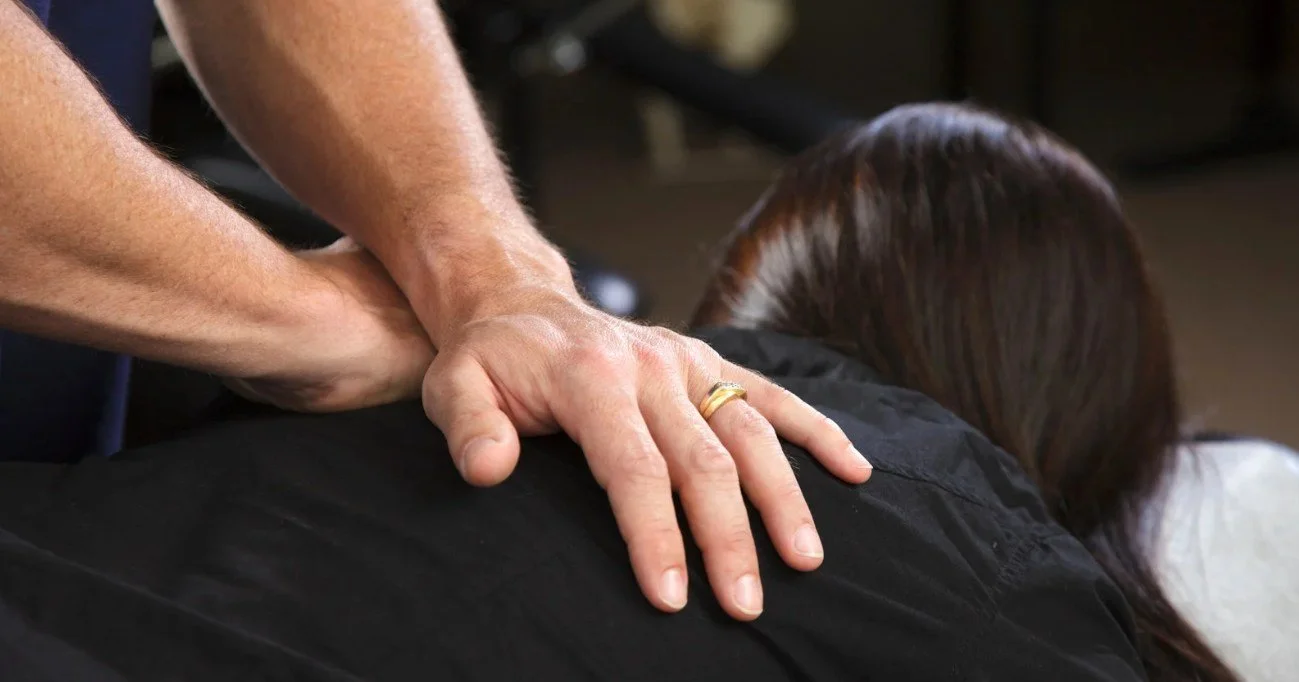
Neither chiropractic nor massage cures frozen shoulder on its own. The capsule changes follow their own biological timeline. What good care can do is reduce pain, limit how much motion you lose, and help you regain function sooner once the shoulder starts to thaw.
What Chiropractic Care Adds
A chiropractor starts with an assessment. That includes comparing active motion (you move the arm) with passive motion (the practitioner moves it). Loss in both directions points toward frozen shoulder, while other patterns can suggest rotator cuff problems, arthritis, or referred pain from the neck.
Treatment for a frozen shoulder is usually gentle. It can include low-grade joint mobilization of the shoulder, mobility work for the upper back and shoulder blade, and a home exercise program. Forceful manipulation of a painful, irritable shoulder joint is not the main tool here.
Chiropractic care at Muscle Release Massage Therapy is led by a chiropractor with a sports medicine and kinesiology background, which suits a movement-focused plan.
What Massage Therapy Adds
Massage cannot reach and stretch the joint capsule directly. It works on the muscles around it. When the shoulder stiffens, surrounding muscles guard and tighten, and that adds pain and stiffness on top of the capsule problem.
Therapeutic massage can target the upper trapezius, chest, lats, and rotator cuff muscles. It also helps many people sleep better and tolerate their home exercises. Fascial stretching sessions add assisted stretching with traction, which is useful once the shoulder can tolerate it.
When Both Make Sense
Combined care tends to be most useful when stiffness, not pain, is the main problem. Massage reduces muscle guarding first, so joint mobilization and exercise are better tolerated right after.
Signs a combined plan fits you:
Your pain has settled, but you still cannot reach overhead or behind your back.
Your neck, upper back, or opposite shoulder has started to ache from compensating.
You improve after one type of session but lose the gain within a day or two.
You want a structured home program, not just hands-on treatment.
Not sure which one to book first? Request a consult at our South Edmonton clinic or our St. Albert location, and we can help you decide based on your current stage.
The Stage-Matched Shoulder Plan: An Original Decision Framework
Stage names are useful, but they are hard to judge on your own. A more practical guide is how irritable your shoulder is right now. This framework uses a quick irritability check to decide how much chiropractic, massage, and stretching makes sense. It is an educational tool, not a description of any specific clinic's protocol, and it does not replace a professional assessment.
Step 1: Run the Irritability Check
Answer these four questions honestly:
Does shoulder pain wake you up most nights?
Does pain start well before you reach the end of your available motion?
After activity, does the ache last more than an hour?
Is resting pain above 5 out of 10?
Three or four yes answers: high irritability. One or two: moderate. None: low irritability, where stiffness is the main limit.
Step 2: Match the Care Mix
| Irritability | Likely stage | Suggested care mix | Stretching intensity |
|---|---|---|---|
| High | Usually freezing | Mostly massage for pain and guarding, chiropractic for assessment and gentle mobilization | Pain-free range only, short holds |
| Moderate | Late freezing or early frozen | Roughly equal massage and chiropractic, plus a daily home program | Mild stretch discomfort that fades within minutes |
| Low | Frozen or thawing | Chiropractic mobilization and exercise lead, massage supports tissue quality | Firm stretch, progressive holds, strengthening added |
Step 3: Relieve, Restore, Reinforce
Relieve: Reduce pain and muscle guarding so you can sleep and move. Success looks like fewer night wakings.
Restore: Regain motion in small, measurable steps. Success looks like higher reach on a wall or door frame each week.
Reinforce: Build rotator cuff and shoulder blade strength so gains stick. Success looks like doing daily tasks without trick movements such as hiking the shoulder.
Re-run the irritability check every 2 to 4 weeks. When your score drops a level, the care mix shifts with it.
Your First 12 Weeks: A Step-by-Step Recovery Checklist
The first three months set the pattern for the rest of recovery. Use this timeline as a structure to discuss with your practitioners.
Week 0 to 1: Get a clear diagnosis. See a physician or chiropractor to confirm frozen shoulder and rule out a rotator cuff tear, arthritis, or neck-related pain. Ask whether imaging is needed.
Week 1: Record a baseline. Mark how high you can reach on a wall, note whether you can touch the back pocket of your pants, and rate night pain from 0 to 10.
Weeks 1 to 4: Focus on calming pain. Book care based on your irritability level. Start a short daily home program of pain-free motion, such as supported pendulum swings and table slides.
Weeks 4 to 8: Build consistency. Keep sessions on a steady schedule rather than booking only when pain spikes. Add heat before home stretching if your practitioner approves.
Weeks 8 to 12: Re-measure and adjust. Repeat your baseline tests. If reach and sleep are improving, progress the plan. If nothing has changed, ask about a physician referral for options such as a steroid injection or hydrodilatation.
After week 12: Re-check every 4 to 6 weeks. Shift toward strength and function as stiffness eases.
Before Your First Appointment
Write down when symptoms started and any injury, surgery, or period of arm immobilization before that.
List health conditions such as diabetes or thyroid problems, since both are linked to frozen shoulder.
Note which daily tasks are hardest, such as dressing, reaching a seatbelt, or sleeping.
Check your extended health benefits for chiropractic and massage maximums.
Wear a tank top or loose shirt so the shoulder and shoulder blade can be assessed.
Local Considerations for Edmonton and St. Albert
Alberta winters add shoulder demands that many recovery plans overlook. Plan around them instead of pushing through them.
Snow shovelling: Use a push-style shovel, keep loads small, and let the unaffected arm do the lifting. Ask a neighbour or hire help during a painful stage.
Winter clothing: Put the affected arm into your coat sleeve first and take it out last. Zip-front layers are easier than pullovers.
Scraping windshields: Use a long-handled scraper and stand closer to the vehicle so the arm stays below shoulder height.
Icy sidewalks: A fall onto an outstretched arm can mean a fracture and time in a sling. Immobilization is a known risk factor for frozen shoulder, so good winter footwear and ice cleats matter.
Seatbelts: Reaching back for a seatbelt is a common painful movement. Pull it with the opposite hand where possible.
Realistic Service Logistics
Two locations: Muscle Release Massage Therapy has a South Edmonton clinic on 51 Avenue NW and a St. Albert clinic on Perron Street. Book at the location you can reach consistently, since regular attendance matters more than the occasional long session.
Referrals and coverage: In most cases, you do not need a doctor's referral to see a chiropractor. Chiropractic and massage are usually claimed under separate extended health benefit categories, and some plans ask for a physician's note for massage.
Direct billing: Direct billing is available for most health plans. Confirm your provider before your visit.
Accessibility: The South Edmonton clinic does not currently have a wheelchair-accessible parking lot or bathroom. Contact the clinic in advance if you need accommodations.
Scheduling: Recovery works best with a steady rhythm, so book several visits ahead when your plan is set. Evening and weekend times tend to fill first.
Ready to map out your recovery? Book a kinesiology assessment to get a structured movement and strength plan that pairs well with chiropractic and massage care.
Common Mistakes That Slow Frozen Shoulder Recovery
Forcing painful stretches early. Aggressive stretching in the freezing stage often triggers more pain and guarding, not more motion.
Resting the arm completely. Keeping the arm still for long periods can make stiffness worse. Gentle, pain-free movement is usually better than none.
Assuming it is a rotator cuff injury. Both cause shoulder pain, but they are treated differently. A rotator cuff injury usually keeps more passive motion than a frozen shoulder does.
Stopping the home program when pain eases. The frozen stage feels better but is still stiff. This is when consistent work pays off most.
Relying only on passive care. Hands-on treatment helps, but motion and strength are kept through your own daily exercise.
Ignoring blood sugar. For people with diabetes, better glucose control is linked to a smoother recovery. Work with your physician on it.
Comparing your timeline to someone else's. Stage lengths vary widely. Track your own measurements instead.
What To Do If Something Goes Wrong
Setbacks are common and usually manageable. Use these steps when recovery does not go to plan.
A flare lasts more than 24 to 48 hours after treatment or exercise. Drop back to a pain-free range, use heat or ice as tolerated, and tell your practitioner at the next visit so intensity can be reduced.
You lose motion after weeks of steady gains. Re-run the irritability check. A higher score means the plan should shift back toward pain relief for a few weeks.
No measurable change after 8 to 12 weeks of consistent care. Ask for a physician review. Steroid injections, hydrodilatation, or a surgical opinion may be appropriate.
Sudden weakness after a fall or a pop in the shoulder. Stop exercises and see a physician promptly, since this can signal a tear or fracture.
Numbness, tingling, or pain spreading down the arm. Get assessed for a neck or nerve source before continuing shoulder-focused care.
Shoulder pain with chest pressure, shortness of breath, sweating, or nausea. Call 911. Left shoulder pain can be a sign of a heart problem.
Frequently Asked Questions
How long does frozen shoulder last?
Frozen shoulder usually lasts between one and three years from first symptoms to full recovery. The freezing stage runs 6 weeks to 9 months, the frozen stage 4 to 6 months, and the thawing stage 6 months to 2 years. People with diabetes often have a longer course.
Is chiropractic or massage better for frozen shoulder?
Neither is better in every case. Massage is often more helpful when pain and muscle guarding are high, while chiropractic care adds joint assessment, mobilization, and exercise progression. Many people do best with both, adjusted to their current stage.
Can a chiropractor fix a frozen shoulder?
A chiropractor cannot make the joint capsule heal faster than its natural course. Chiropractic care can help manage pain, maintain and restore motion with gentle mobilization, and guide a home exercise program. A chiropractor can also identify when a physician referral is needed.
Should I massage a frozen shoulder?
Yes, massage from a trained therapist is generally safe and can reduce pain and tension in the muscles around the shoulder. Pressure should be lighter during the painful freezing stage. Avoid aggressive self-massage or forceful stretching when the shoulder is highly irritable.
How often should I get treatment for frozen shoulder?
Frequency depends on your stage and irritability. Many plans start with weekly visits, then space them out as your home program takes over. Consistency matters more than the number of sessions in a single week.
Do I need a referral to see a chiropractor in Alberta?
In most cases, you do not need a doctor's referral to see a chiropractor. Some extended health plans have their own rules for claims, especially for massage therapy. Check your policy before your first visit.
When is frozen shoulder serious enough for a doctor?
See a physician if pain keeps getting worse, if you have diabetes, or if there is no progress after 8 to 12 weeks of consistent care. Seek help right away after a fall with sudden weakness. Call 911 if shoulder pain comes with chest pressure or shortness of breath.
Can frozen shoulder come back?
Recurrence in the same shoulder is uncommon. It is more likely when a contributing factor such as diabetes is still present. Some people later develop frozen shoulder in the opposite shoulder.
Conclusion
Frozen shoulder follows a long but predictable course: freezing, frozen, then thawing. You cannot skip the stages, but you can make each one less disruptive. Massage therapy helps most when pain and muscle guarding are high. Chiropractic care helps with assessment, joint mobility, and exercise progression. For most people, a combined plan matched to their current irritability level, plus a consistent home program, is the most practical path.
If your shoulder is stiff, painful, or not improving, a proper assessment is the right first step. Our team in South Edmonton and St. Albert offers chiropractic, massage therapy, and kinesiology under one roof, so your care can change as your shoulder does.
Book today and start with a plan built for your stage.