
Scoliosis Pain Relief Without Surgery: Managing Curve Asymmetry and Discomfort
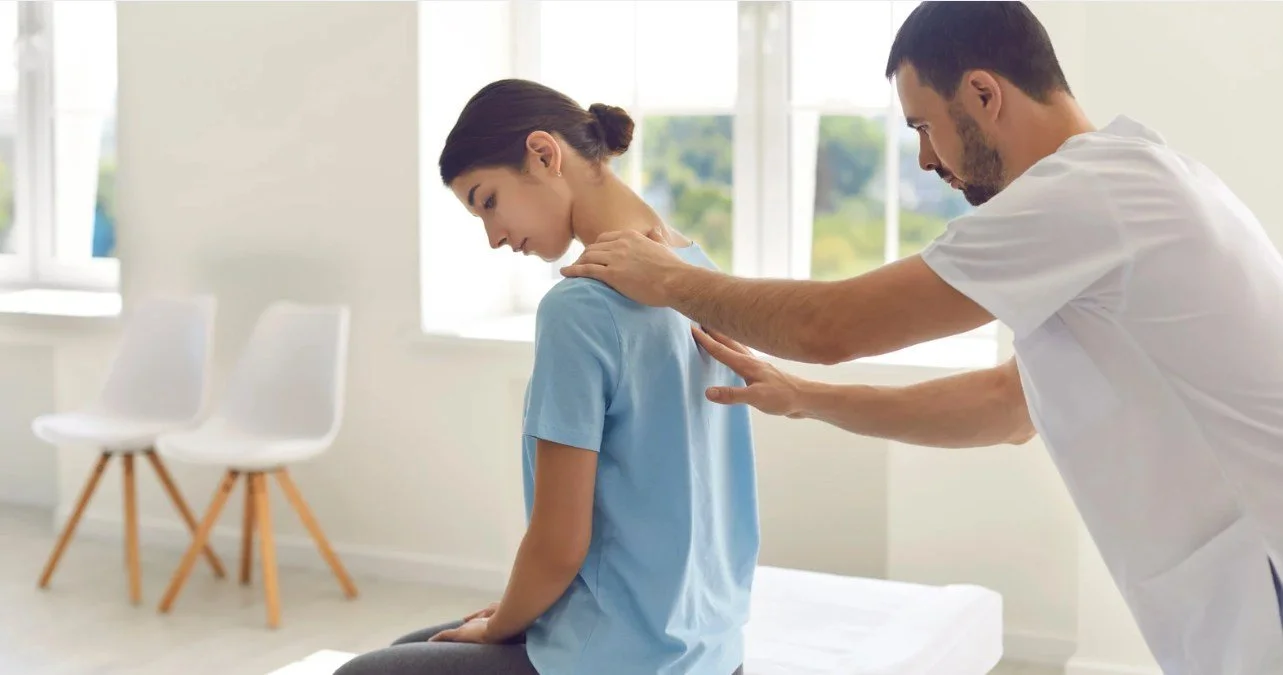
Searching for non-surgical scoliosis relief usually means one of two things: you want to understand why a curved spine causes pain in places that don't match the curve, or you're looking for a realistic conservative care plan instead of jumping straight to bracing or surgery discussions. Scoliosis is a fixed structural curve, and for the vast majority of people living with it, non-surgical care isn't about straightening the spine back out. It's about managing the muscular imbalance, tension, and postural compensation the curve creates. This article walks through what actually drives scoliosis-related pain, how conservative care typically approaches it, and what a sustainable long-term plan looks like.
Nothing here replaces a physician's evaluation. Curve measurement, progression risk, and bracing or surgical candidacy are medical decisions that require imaging and a qualified diagnosis.
Quick Summary
Scoliosis pain is usually generated by the muscles compensating around the curve, not by the curve itself.
Manual therapy and corrective exercise cannot change the shape of the spine, but they can influence the soft tissue patterns built around it.
Curve location (thoracic, lumbar, or both) determines where compensation and discomfort tend to show up.
A useful assessment separates what's tight from what's weak, since scoliosis almost always produces both on opposite sides.
Bracing and surgical decisions stay with a physician; conservative care manages the symptom layer around a diagnosed curve.
Consistency matters more than intensity, since this is a structural, long-term condition rather than a short-term injury.
Winter routines in Edmonton and St. Albert can quietly worsen postural compensation patterns.
Certain warning signs mean stop and see a physician before continuing any hands-on care.
The Pain Isn't Where You'd Expect It to Be
One of the more confusing parts of living with scoliosis is that pain often shows up away from the apex of the curve. A thoracic curve might produce most of its discomfort in the lower back or opposite hip. A lumbar curve can create tension up through the shoulder or neck on the opposite side. This happens because the body is constantly working to keep the head level and the pelvis balanced, and that job falls to muscles well outside the curve itself.
According to the National Institute of Arthritis and Musculoskeletal and Skin Diseases, scoliosis is a disorder causing a sideways curve of the spine, and in most people there is no known cause for the curve. Because the cause is structural and largely unknown, non-surgical care isn't aimed at reversing it. It's aimed at everything the body has built around it.
What's Actually Tight, and What's Actually Weak
Every scoliosis curve creates two mirrored problems on either side of the spine:
The concave side (the inside of the curve) tends to shorten and tighten over time
The convex side (the outside of the curve) tends to lengthen and become relatively weak or underactive
Shoulder height, shoulder blade position, and hip height often shift to reflect this imbalance
In more pronounced curves, rib cage rotation can develop and mildly affect breathing mechanics
The neck and lower back frequently pick up secondary tension trying to keep posture level above and below the curve
Addressing only the tight side, which is usually where the pain is felt, tends to give short-term relief without changing the underlying pattern. The weak side needs attention too.
Conservative Care Options at a Glance
| Method | What It Targets | Who Typically Directs It |
|---|---|---|
| Manual therapy | Muscle tightness on the concave side, secondary tension in neck/back | Massage therapist or RMT |
| Corrective exercise | Strength and activation on the convex side, core and postural control | Kinesiologist or trained therapist |
| Postural adjustments | Daily habits that reinforce imbalance (desk setup, sleep position) | Self-managed with clinician guidance |
| Bracing | Slowing curve progression in a growing spine | Physician / orthopedic specialist |
| Imaging and monitoring | Tracking curve angle over time | Physician / orthopedic specialist |
The first three are where conservative, non-surgical management typically lives. The last two remain physician-directed and are not something manual therapy or exercise can substitute for.
Curious what a scoliosis-focused visit involves? Thescoliosis page breaks down how curve-related pain is generally approached, andpricing details are available if you're budgeting for ongoing care.
A Three-Zone Way to Approach Assessment
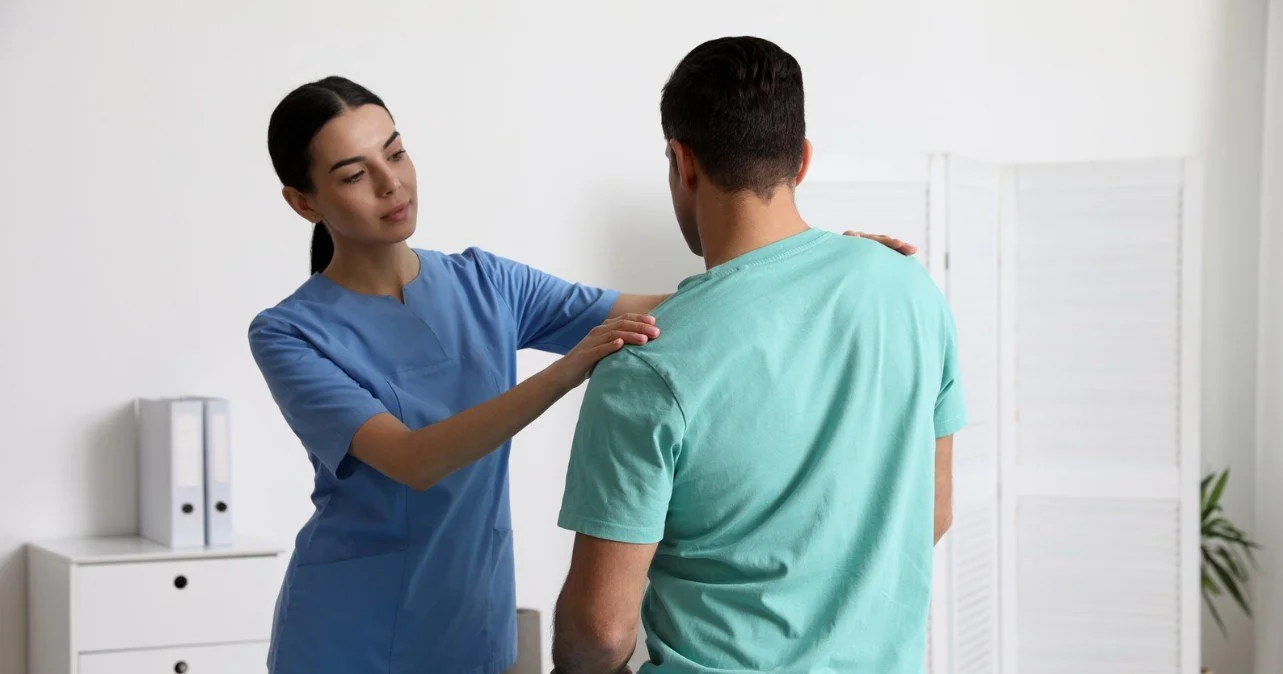
Rather than treating wherever it hurts, it helps to think about the body in three zones relative to the curve. This is simply one way to organize an assessment, not a description of a fixed clinical protocol.
Zone 1 — The curve itself. Where is it located (thoracic, lumbar, or both), and which side is convex versus concave? This usually comes from existing imaging or a physician's report rather than a hands-on exam alone.
Zone 2 — The compensation ring. The muscles immediately surrounding the curve that are doing the most adapting: paraspinals, lats, and hip musculature depending on curve location.
Zone 3 — The distant compensators. Areas further from the curve, like the neck or opposite-side hip, that tighten up trying to keep the head and pelvis level.
Working through all three zones, instead of just treating the zone where pain is felt, tends to produce a more complete picture of what's driving day-to-day discomfort.
Want this kind of assessment done in person?Book a consultation and mention your curve location and current pain areas when you book.
Building a Sustainable Care Rhythm
Because scoliosis doesn't resolve, care works better as an ongoing rhythm than a short fix. A general pacing structure looks something like this, adjusted to how someone actually responds:
First visit: Baseline assessment — curve zones, current pain map, and any aggravating daily habits
Early phase (first month): More frequent visits to bring down acute tightness and start light corrective movement
Building phase (months two to three): Spacing sessions out while increasing focus on strengthening the convex-side muscles
Maintenance phase (month three onward): Periodic visits, often monthly, adjusted around activity level or flare-ups
Reassessment points: After any physician follow-up, growth spurt (for adolescents), or noticeable change in symptoms
This is a general framework, not a fixed timeline, and actual pacing should reflect how symptoms respond along the way.
Common Mistakes People Make Managing Scoliosis Pain
Chasing the pain instead of the pattern. Treating only the sore side ignores the weak side that's likely contributing to the imbalance in the first place.
Avoiding all exercise out of caution. For most stable, non-progressive curves, appropriate strengthening supports the spine rather than threatening it.
Treating scoliosis like a short-term injury. Stopping care as soon as pain settles tends to let the same compensatory tension rebuild over time.
Relying on willpower for posture. Consciously correcting posture without addressing the underlying muscular tightness is hard to sustain and rarely lasts.
Skipping the physician loop. Manual therapy manages symptoms around a curve; it doesn't replace periodic imaging or physician monitoring of the curve itself.
Local Considerations for Edmonton and St. Albert
Winter changes how people move through the day, and those changes tend to reinforce existing scoliosis compensation patterns rather than create new ones. Heavy coats and layered clothing often encourage a more guarded, asymmetrical gait, especially on icy sidewalks. Long stretches in a car seat during winter commutes add static loading to whichever side is already doing the most compensating. Add in extended desk hours through the colder months, and the concave-side muscles that are typically already shortened get even less opportunity to lengthen. If pain noticeably shifts with the season, that's worth flagging at your next visit so a home routine can be adjusted rather than ignored until spring.
What To Do If Something Goes Wrong
Certain changes mean it's time to stop conservative care and get a physician evaluation instead of continuing manual therapy. These include new numbness or tingling in an arm or leg, a rapid or visible increase in curve asymmetry, unexplained weight loss, or pain that keeps escalating regardless of rest or treatment. For adolescents especially, any noticeable shift in shoulder or hip symmetry between scheduled physician check-ups should be raised early, since growth periods carry the highest risk of curve progression. If a treatment session leaves you significantly more sore for more than a couple of days, contact the clinic before your next visit so the approach can be adjusted rather than repeated at the same intensity. Persistent pain with any neurological symptoms should go to a physician first, not to further manual therapy sessions.
Pairing Manual Therapy With Strengthening
Soft tissue work alone tends to produce relief that fades, because it addresses the tight side without building up the weak side that's contributing to the imbalance. Pairing manual therapy withcorrective exercise aimed at the convex-side stabilizers gives the compensation pattern less room to rebuild between sessions. Some clients also benefit from akinesiology-based assessment to pinpoint exactly which muscle groups need loading versus releasing, since this varies significantly from one curve pattern to another.
A single session is unlikely to shift a compensation pattern that's been building for years. A combination of hands-on care, a home exercise component, and realistic time between visits is generally what produces a lasting change in comfort.
When to See a Doctor First
A new scoliosis diagnosis that hasn't yet been worked up by a physician
Suspected curve progression, particularly during adolescent growth
Numbness, tingling, or weakness anywhere in the arms or legs
Breathing difficulty linked to rib cage rotation
Pain that's severe, constant, and doesn't track with activity or position
A physician can order updated imaging to measure curve progression and decide whether bracing, continued monitoring, or a surgical consult is warranted. Conservative care supports the muscular symptoms around a diagnosed curve; it isn't a substitute for that diagnostic process.
Frequently Asked Questions
Can non-surgical treatment actually straighten a scoliosis curve? No. The curve is a structural change in the spine's bones, and manual therapy or exercise cannot reshape it. These approaches manage the muscular tension and imbalance that build up around the curve instead.
Why does my pain show up far from where my curve actually is? The body compensates for a curve using muscles well beyond the curve itself, trying to keep the head and pelvis level. That compensation is frequently where the actual discomfort is felt.
Is it safe to exercise with scoliosis? For most stable, non-progressive curves, targeted exercise is safe and generally supports better muscular balance. Any new program should still be cleared with a physician, especially for curves that are actively being monitored for progression.
How often should someone with scoliosis get treatment? It depends on symptom severity and how the body responds, but many people start with closer-spaced sessions before shifting to a maintenance schedule. A clinician can help set a realistic frequency based on your specific pattern.
Does a scoliosis curve get worse over time? It depends on the individual and curve type. Adult curves tend to be more stable than adolescent ones, though slow progression is possible, which is why periodic physician monitoring remains important at any age.
Can general massage help with scoliosis-related pain? General massage may offer temporary relief, but an assessment that actually maps your specific curve zones and compensation pattern is more likely to address what's driving the discomfort.
Does a massage therapist make bracing decisions? No. Bracing is a physician or orthopedic specialist's decision, based on curve measurement and progression risk, and falls outside what manual therapy addresses.
What should I bring to a first scoliosis-focused appointment? Bring any existing physician reports or imaging if you have them, along with notes on where you feel pain and which activities tend to make it worse.
Conclusion
Scoliosis is a structural, long-term condition, which means non-surgical management works best as an ongoing rhythm rather than a one-time fix aimed at correcting the curve. Most of the discomfort people experience comes from the muscular compensation built around the curve, not the curve angle itself, which is why addressing both the tight and weak sides together tends to outperform treating pain alone. Season, daily habits, and consistency all play a role in how well that compensation pattern is managed over time, and periodic physician monitoring should stay part of the picture regardless of how conservative care is going. The right combination and pace of care is specific to each curve, which is exactly why an individual assessment matters more than a generic routine.
If curve-related pain or asymmetry is part of your daily life, a proper assessment is the most useful next step. Book a consultation to have your curve pattern evaluated and start a realistic care plan. Ongoing, consistent attention tends to serve a structural condition like scoliosis far better than occasional visits.